



Janus, the Roman god of beginnings, transitions and duality, is known for his two faces. In Roman mythology, he symbolizes direction, beginnings, ends and contrasts.
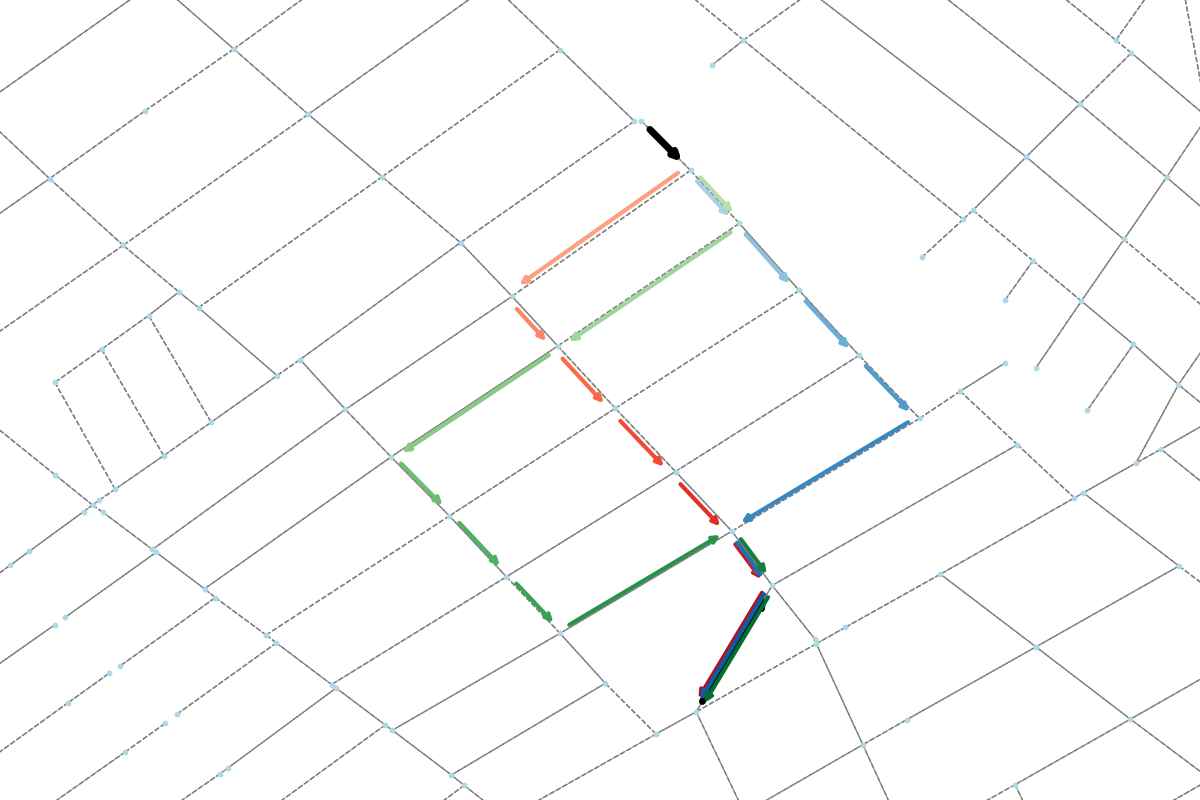
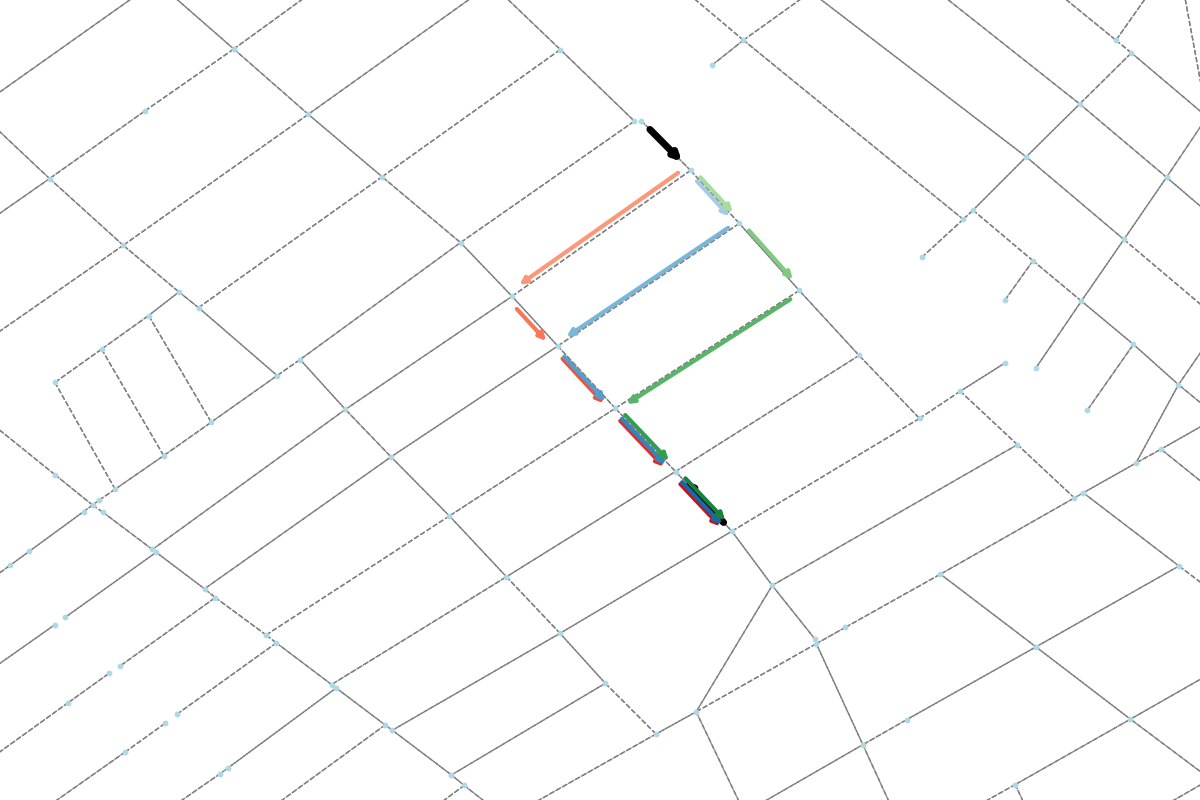
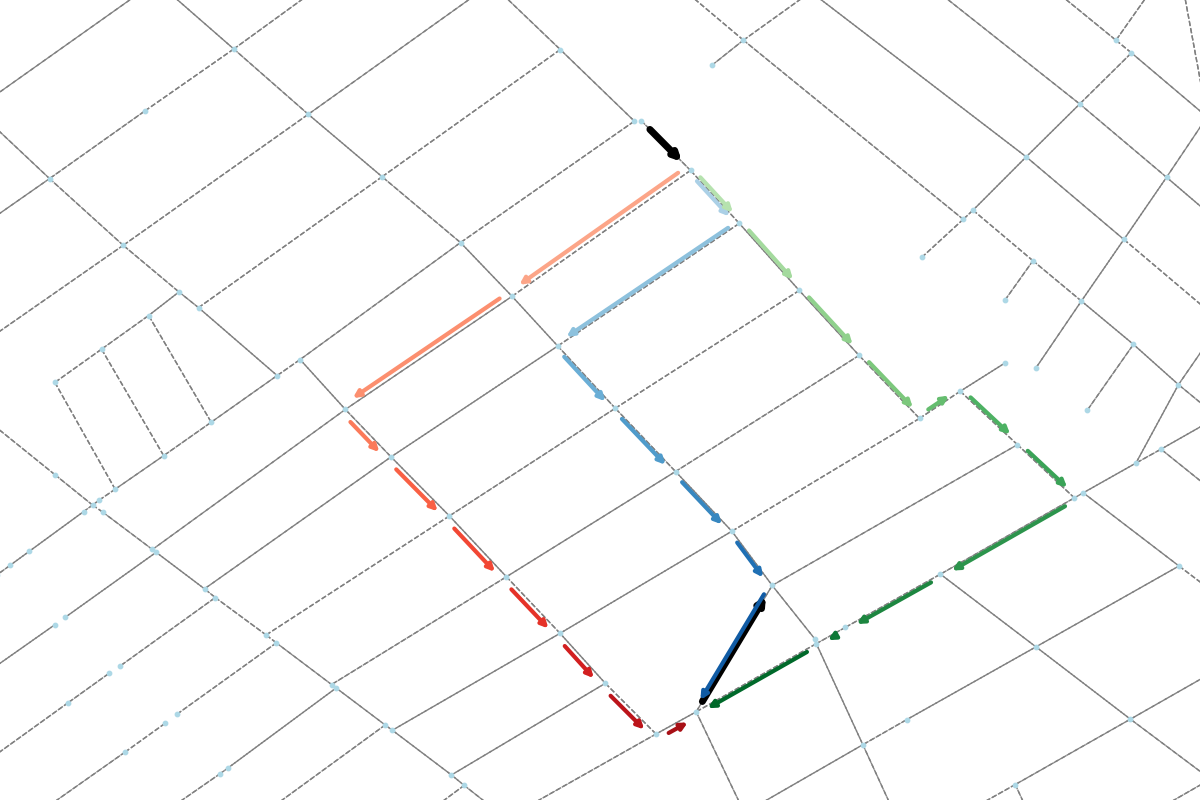
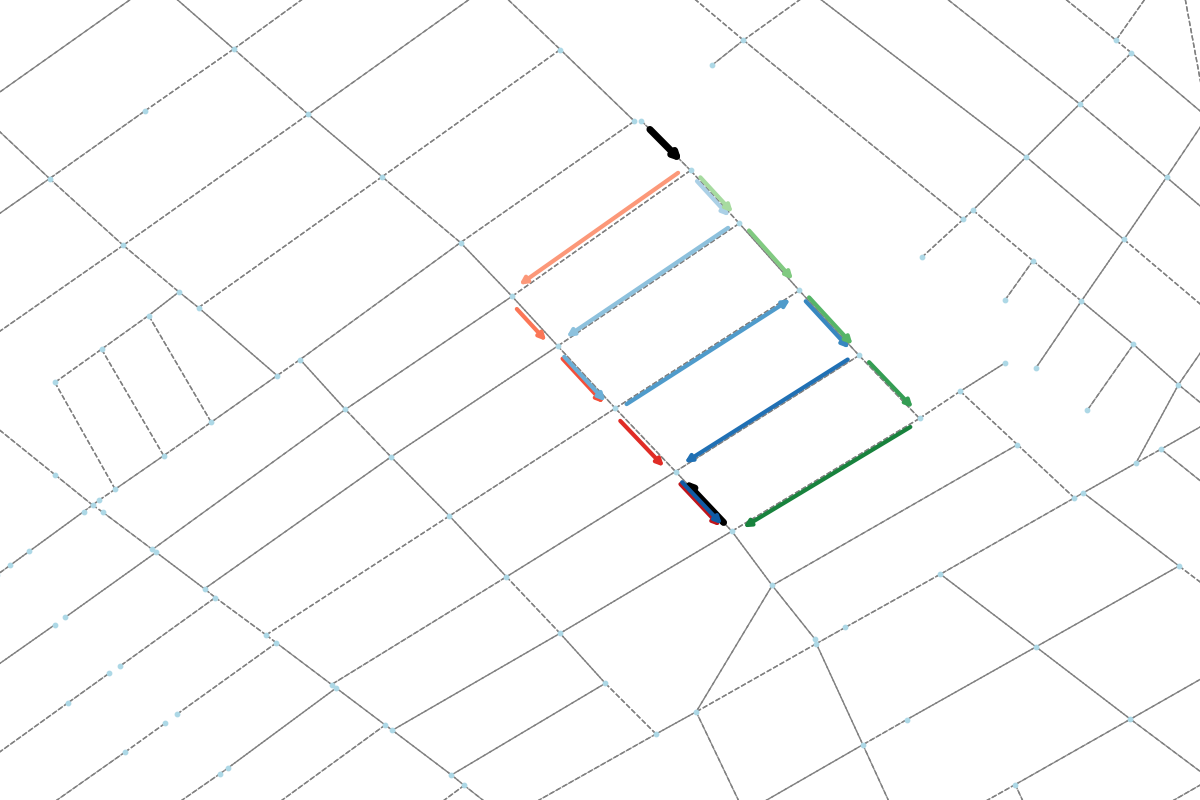
JanuX is not a Roman god, but it is a robust yet simple tool for generating a set of path options in directed NetworkX graphs. It is designed for efficient routing or creating path options for custom requirements.
JanuX works with Python 3.6+.
- Install from PyPI:
pip install janux- Or install from source:
git clone https://github.com/COeXISTENCE-PROJECT/JanuX.git
cd JanuX
pip install -r requirements.txt
pip install -e .JanuX/
|-- janux/
| |-- graph_builders/ build directed graphs from SUMO network files
| |-- path_generators/ path generators, wrappers, and helper utilities
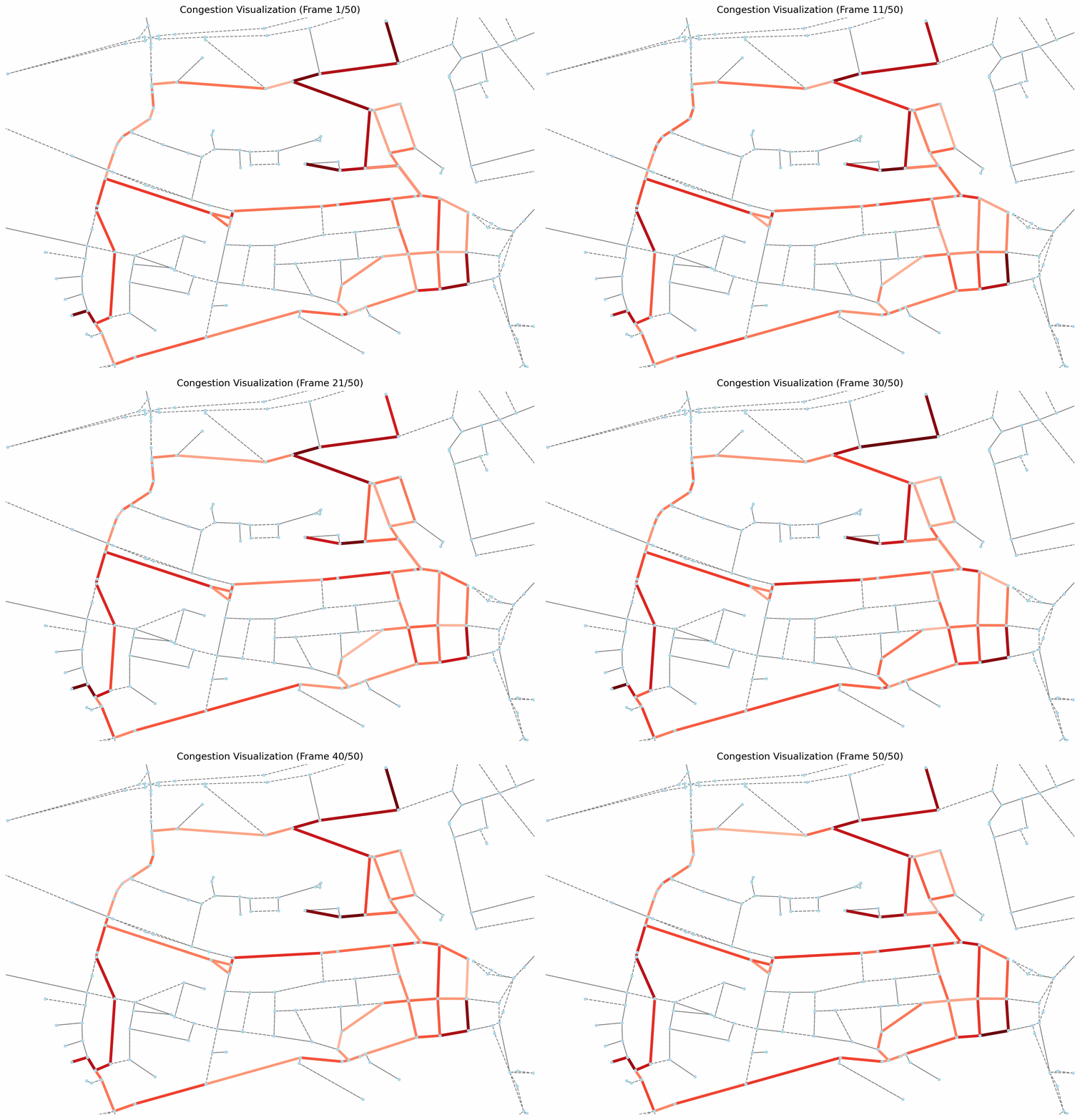
| |-- visualizers/ plotting and animation tools
| |-- utils.py shared helpers
|-- examples/
| |-- network_files/ sample SUMO networks and OD data for Cologne, Csomor, and Ingolstadt
| |-- path_generation_examples/ runnable path-generation scripts
| |-- visualization_examples/ runnable plotting and animation scripts
|-- graphics/ docs assets
|-- pyproject.toml package metadata and build configuration
|-- requirements.txt dependency list for source installs
|-- CITATION.cff citation metadata
|-- LICENSE.txt MIT license
|-- README.md project overview, installation, and usage notes
The janux/path_generators package includes four route-generation strategies:
| Generator | Best for | What it adds |
|---|---|---|
basic_generator |
getting started with candidate route sampling | logit-style probabilistic path generation |
extended_generator |
adding more control to sampled routes | loop handling, path-length limits, and adaptive parameter shifting |
heuristic_generator |
choosing route sets with custom criteria | scores sampled route sets with user-defined heuristics and weights |
clustering_generator |
building structurally distinct alternatives | avoids repeated road segments and junction revisits, and can favor less similar routes |
All generators share a similar interface and can return either raw route sets or DataFrame outputs, with optional free-flow travel times.
Here is a minimal example using extended_generator:
import janux as jx

network = jx.build_digraph(
    "path/to/network.con.xml",
    "path/to/network.edg.xml",
    "path/to/network.rou.xml",
)

origins = ["origin_edge_id"]
destinations = ["destination_edge_id"]

routes = jx.extended_generator(
    network,
    origins,
    destinations,
    as_df=True,
    calc_free_flow=True,
    number_of_paths=3,
    num_samples=300,
    beta=-3,
    adaptive=True,
)

print(routes[["origins", "destinations", "path"]].head())
This returns a pandas DataFrame with origins, destinations, path, and optionally free_flow_time. Set as_df=False if you prefer the raw route dictionary instead. For a fuller runnable example using the bundled sample networks, see extended_example.py.
Two small scripts are a good starting point:
python examples/path_generation_examples/basic_example.py- Builds a sample network, generates multiple candidate paths for each origin-destination pair, saves the routes as CSV, and can also write route plots to
examples/figures/.
python examples/visualization_examples/single_route_visualization.py- Draws one route on top of a sample network and saves the figure to
examples/figures/.
Both scripts use the sample files in examples/network_files/, so they should run directly after installing the package.
 |
 |
|---|---|
 |
 |


JanuX supports RouteRL and URB, with accompanying papers in SoftwareX and NeurIPS.
If you use this repository, please cite it using the following BibTeX:
@software{JanuX,
  author = {Akman, Ahmet Onur and Torbus, Błażej},
  title = {{JanuX}},
  doi = {https://doi.org/10.5281/zenodo.20204628},
  url = {https://github.com/COeXISTENCE-PROJECT/JanuX},
  version = {1.1.0},
  month = may,
  year = {2026}
}