nosygopher is a Golang command line utility for sniffing those smelly network packets. Aims to combine tcpdump and ngrep-like functionality.
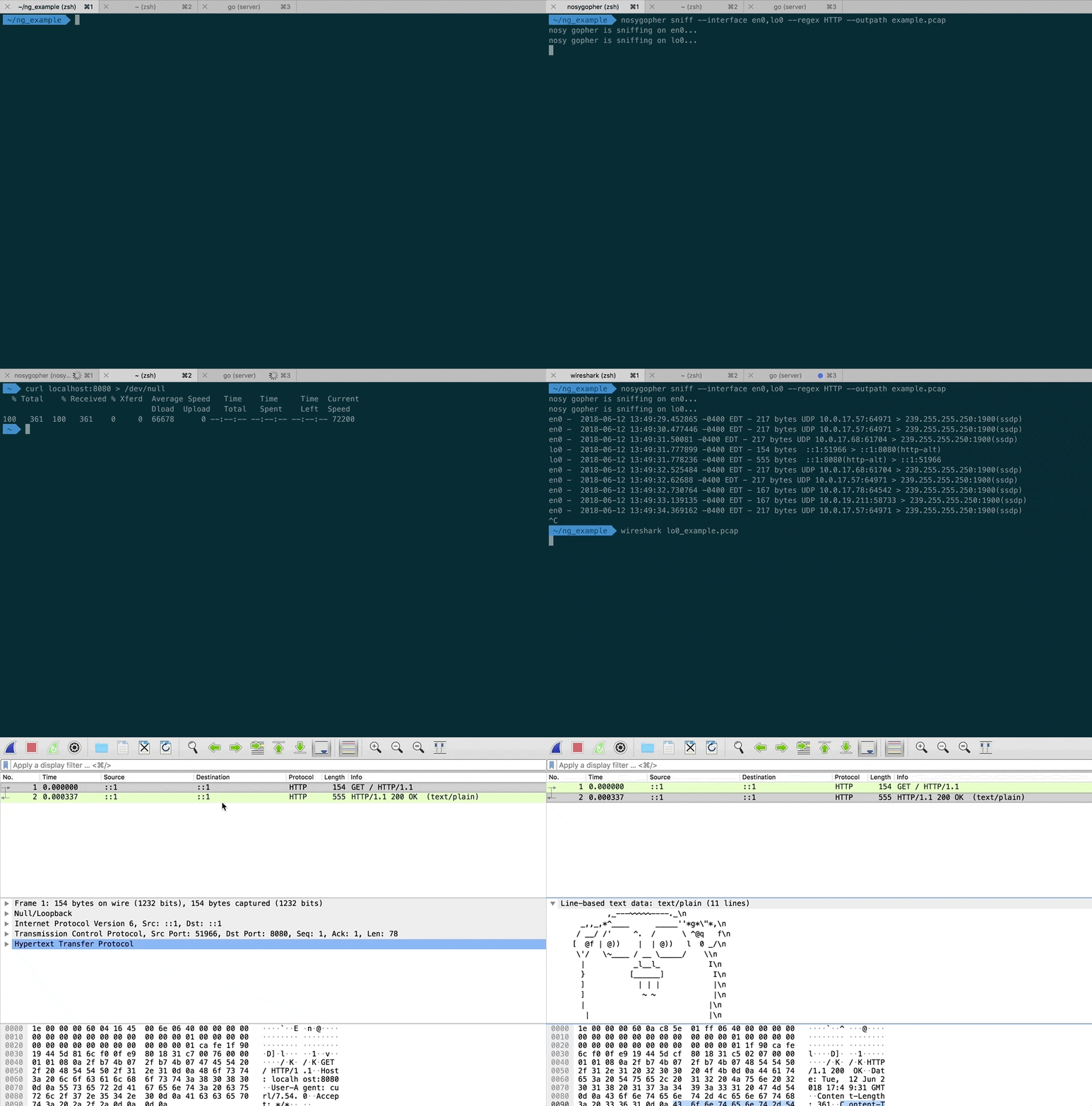
- List network interfaces on the system which nosygopher can capture from with
nosygopher list - Capture packets from multiple interface devices concurrently, e.g.
nosygopher sniff -i en0,vboxnet0,ipsec0 - Provide a regex to match against packet payloads, e.g.
nosygopher sniff -i en0 -r 'HTTP'
go get "github.com/aivensong/nosygopher"
Make sure your $GOPATH/bin is in your $PATH.
To see a list of all available commands and options, run nosygopher help.
$ nosygopher help
NAME:
   nosygopher - sniff things

USAGE:
   nosygopher [global options] command [command options] [arguments...]

VERSION:
   0.1.1

COMMANDS:
     list     list interfaces nosygopher can sniff
     sniff    print contents of packets on a network interface
     help, h  Shows a list of commands or help for one command

GLOBAL OPTIONS:
   --help, -h     show help
   --version, -v  print the version

$ nosygopher help sniff
NAME:
   nosygopher sniff - print contents of packets on a network interface

USAGE:
   nosygopher sniff [command options] [arguments...]

OPTIONS:
   --interface value, -i value  comma-separated list of interface devices to sniff on (e.g. en0,bridge0) (default: "en0")
   --outpath value, -o value    path to write pcap file to, if left empty will not write
   --bpf value, -b value        berkeley packet filter string ('tcp and port 80')
   --regex value, -r value      regular expression to match against data payload of packet
   --quiet, -q                  if present will not log to stdout
--promiscuous, -p capture in promiscuous modeConcurrently capture packets from en0 and lo0 devices, with berkely packet filter string tcp and port 8080
$ nosygopher sniff -i en0,lo0 --bpf 'tcp and port 8080'
nosy gopher is sniffing on en0...
nosy gopher is sniffing on lo0...
lo0 -  2018-06-13 11:09:45.998443 -0400 EDT - 88 bytes  ::1:51726 > ::1:8080(http-alt)
lo0 -  2018-06-13 11:09:45.998612 -0400 EDT - 88 bytes
Capture packets from device en0 that have a payload which matches the regex "HTTP/[^ ]+ ([\\d]+)" (an HTTP response), saving the output to a pcap file named en0_capture.pcap
$ nosygopher sniff -i en0 -r "HTTP/[^ ]+ ([\\d]+)" -o capture.pcap
en0 -  2018-06-13 11:16:45.916351 -0400 EDT - 211 bytes  ::1:8080(http-alt) > ::1:51769